Montblanc for the Arab Market
Exploring the changes that took place to the Montblanc emblem for the purposes of the middle eastern / Arab market.
By Jim Monty (Nibfolio Co-Founder) · 15 min read · reference
For my inaugural piece for the Journal
I wanted to take on a subject that has nagged at me for years and which, as far
as I have found, has never been written up anywhere before apart forum a
handful of forum threads. Now, at the outset I want to make clear that this
article is not “gospel”, it is the result of my own research and there is of
course room for error.
First, a thank you to my contact
at Montblanc, whom I have known for only a short time, but who graciously opened
the door to the Montblanc Archives team in Hamburg for me. You know who you are.
I won’t name you, because naming you would only earn you a fresh pile of
requests from other collectors! This article would not have been possible
without your, assistance.
Now, anyone who follows me on
Instagram will know I am a 149 fanatic. I have spent most of my nearly twenty
years as a collector trying to assemble the most complete collection of 149s I
can. I call it my impossible dream, and so far it has been very good at living
up to the name.
This particular bit of trouble started around
2010, with a thread on FPN’s Montblanc sub-forum about pens whose emblems had
been altered. Most collecting trouble starts on a forum. Years later I met my
first ‘triangle’ 149 in the wild, at auction, and, being a reasonable person,
paid a princely sum for it and went looking for more. What I found instead were
accounts and recollections from well-known restorers, collectors and dealers.
They knew a great deal and its thanks to them that the community has as much
information as we do but unfortunately I found that some of the information
contradicted itself.
So when I was given the chance to put a few questions to the
Montblanc Archives team, the Arab market pens was one of the things I asked
about. The reply came after a few weeks, and within the answers to my other
various questions the answer to this question was short and to the point. They informed
me that between the 1950s and the 1970s, Montblanc made pens for the Arab
market with the emblem modified or removed. It wasn’t just 149s, either; other
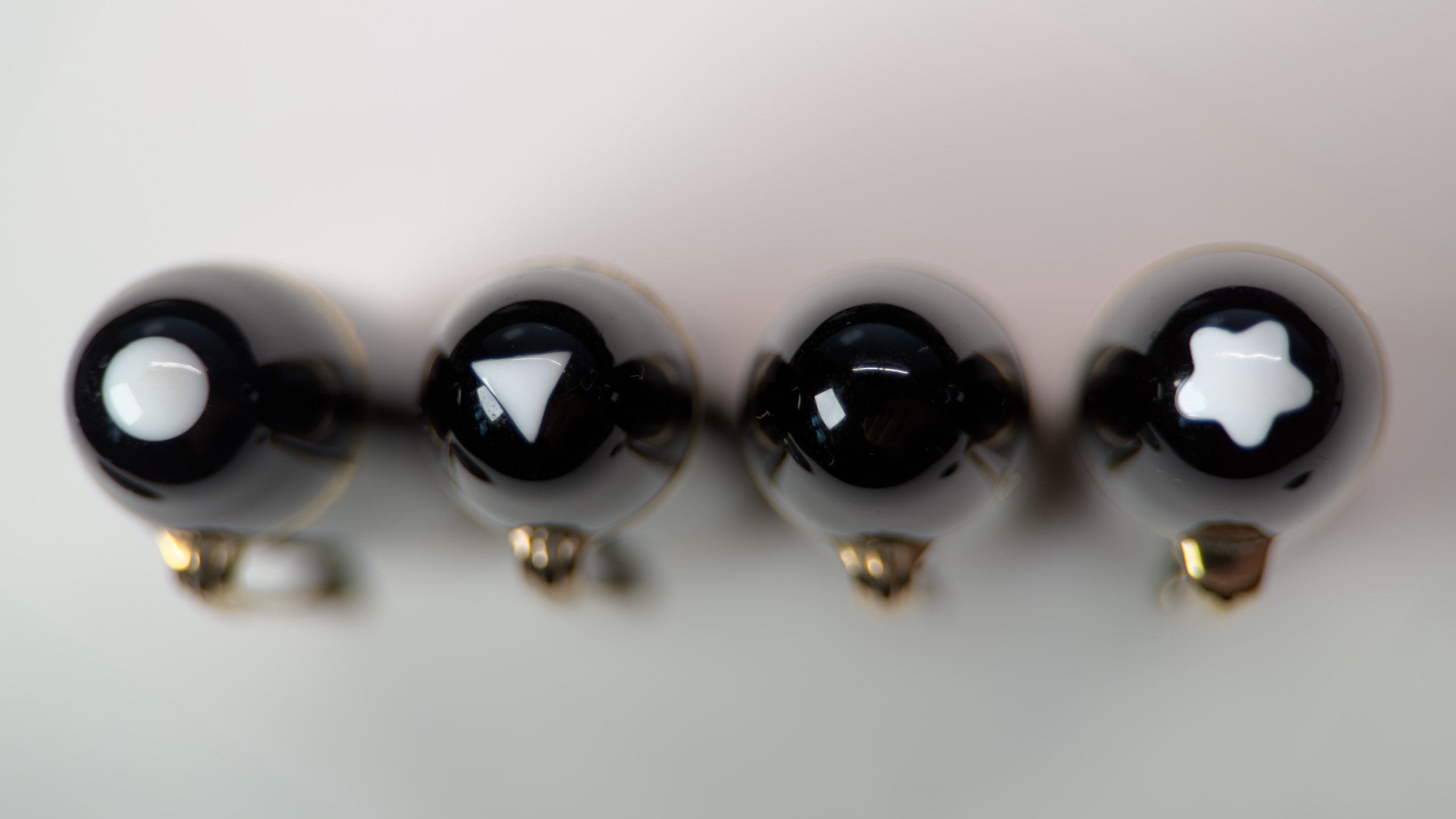
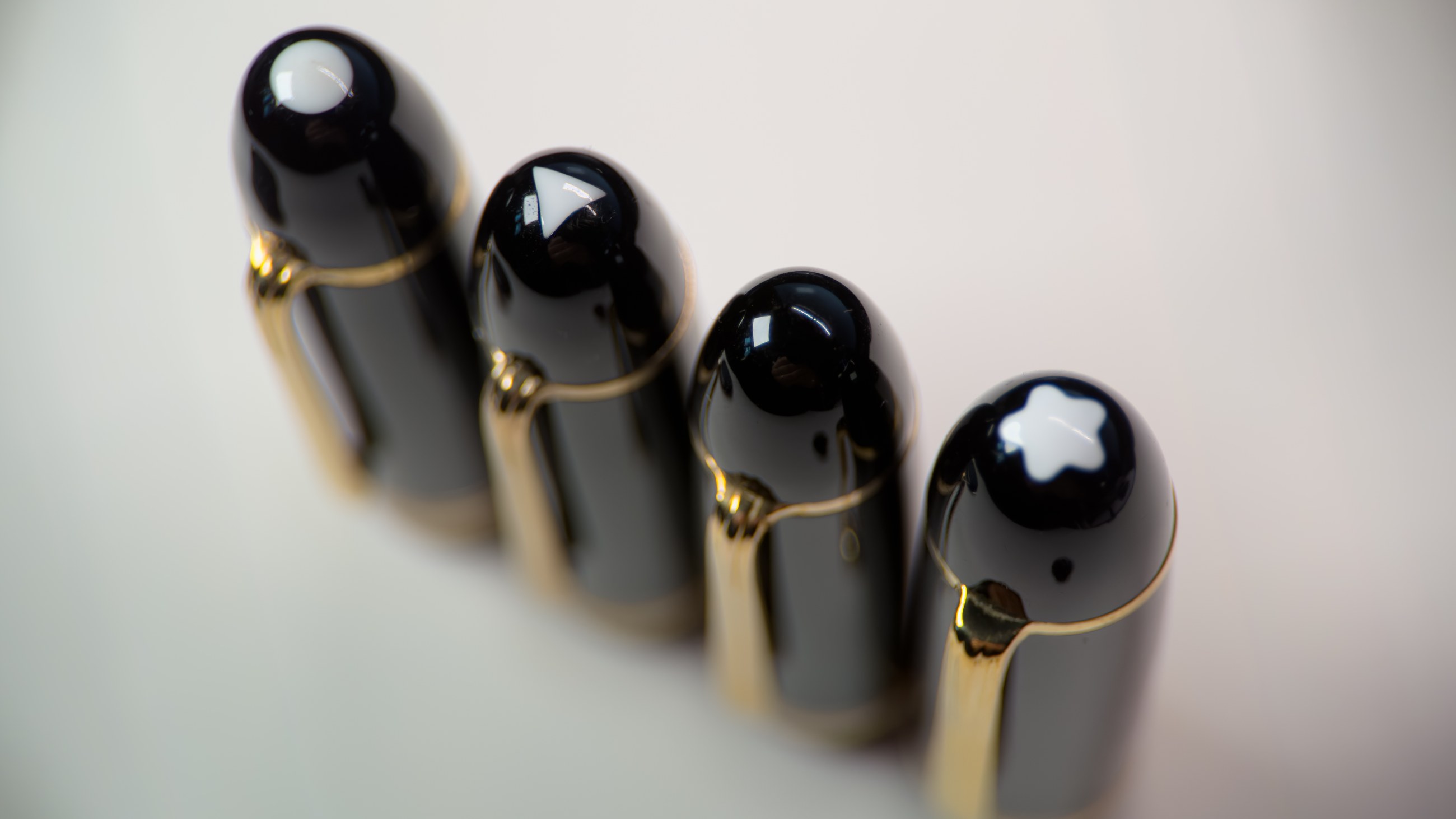
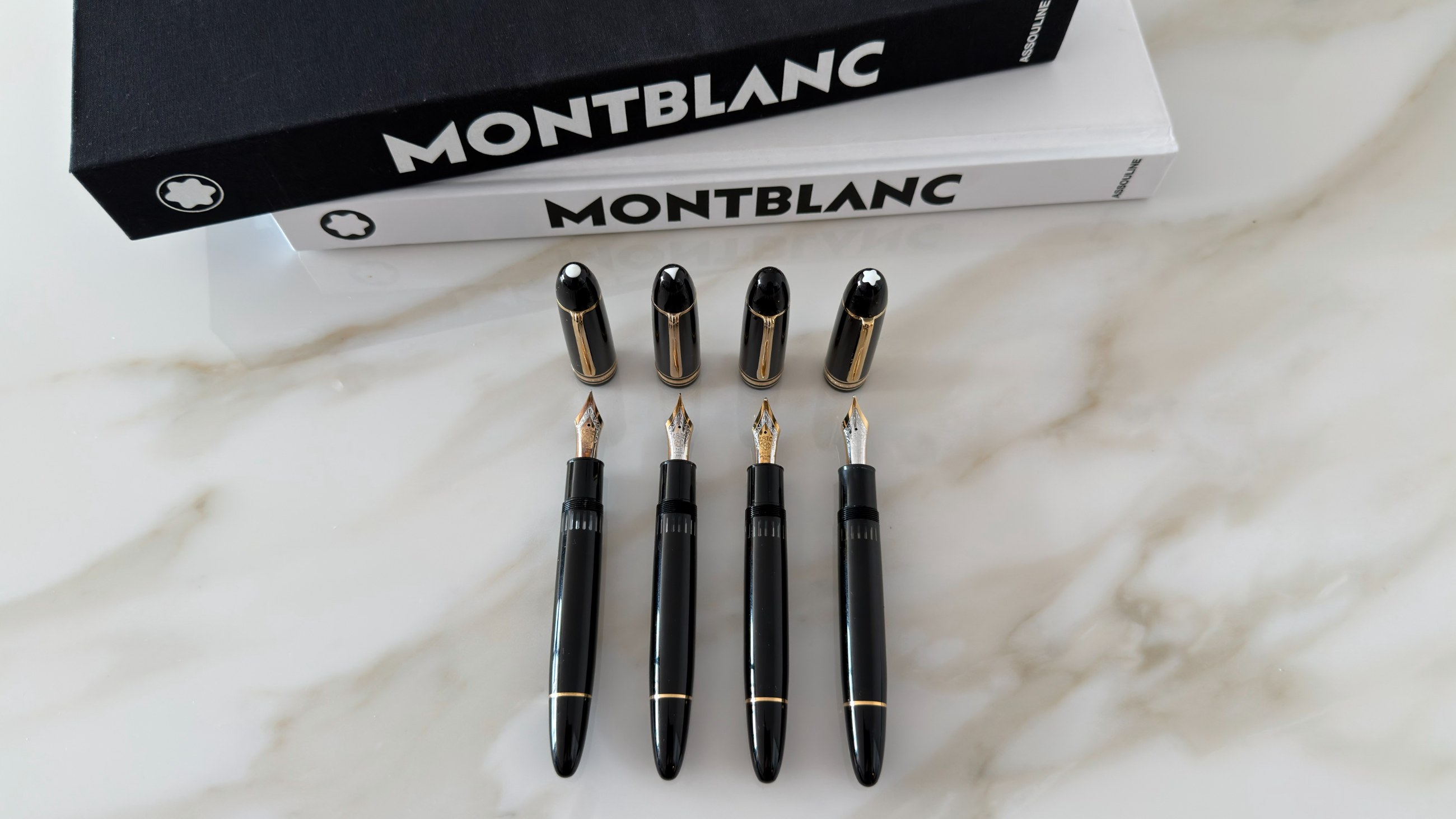
models got the same treatment. Each had (i) a white circle, (ii) a white
five-pointed star, (iii) a white triangle, (iv) a ‘split emblem’ or (v) no
emblem whatsoever.
Official guidance at last! I was delighted right up until I
laid this information alongside some of my own pens as well as photographs I
had gathered over the years. The trouble was that some of this information didn’t
quite add up!
The star (no, not that one)
To make sense of the variants I first had to go back to the
emblem itself. Most of us call the white shape on top of every Montblanc cap
the ‘star’, the ‘snowflake’ or the ‘snowcap’, interchangeably as the mood takes us. Montblanc’s own website
currently goes with ‘snowcap emblem’ and ‘star’.
It important to note that for almost 7 years it didn’t exist
at all. The first pens from the ‘Simplo Filler Pen Co.’ (Montblanc’s original
name) had a plain red or white cap top and nothing you could call an emblem.
The ‘star’ as we know today was adopted in 1913, and despite the nickname there
is nothing celestial about it. It is a stylised picture of Mont Blanc, the
highest peak in the Alps, seen from directly above, with its six glacial
valleys running down from the summit.
Curiously, I came across second
theory in Claus Holten and Poul Lund’s book Montblanc in Denmark 1914-1992:
The Untold Story. They speculated that as Montblanc’s early Hamburg
headquarters were in the Sternschanze district, and Sternschanze means,
literally, ‘star redoubt’, after an old fortification, the ‘star’ was a
reference to its first headquarters. Whichever you prefer, neither explanation
has stopped some people from comparing the emblem to the Star of David, the
well-known symbol of Judaism that also appears on the flag of Israel.
I should say clearly that there
is no official explanation, and I have found nothing in writing, for why
Montblanc decided to alter its emblem. I suspect timing had a lot to do with
it. If the first of these pens were made in the 1950s, they came only a few
years after the founding of the modern state of Israel in 1948. The political
consequences, not least in the Arab world, are far beyond the scope of this
article, but they are hardly a secret. Montblanc may well have decided that its
emblem would do it no favours in a market it was trying to break into, a market
newly rich with oil money! It is also p[possible (though my own speculation)
that it could also well have been Montblanc’s own distributors in the region
who may have asked for the change. We also need to remember that back in the
1950’s. 1960’s and 1970’s the main focus was on sales and not ‘protecting the
brand’. We see parallels in the watch market for this time period where it wasn’t
strange for Rolex or omega to create custom dials or special orders. Who knows!
What I was curious to find out,
and something which the answer did not expand on, was the periods in which the
different emblems were used and why. This is where the hard work began.
Which came first?
The late Axel Hübner, the respected collector and former
owner of the Montblanc boutique in Bremen, once put together a chronology of
his own. He listed the emblems as well as the various models and decades in which
they were produced. The problem I came across was that, again, short of seeing
photos or evidence the information didn’t match my research (no criticism at
all of course!). i therefore have created this list based on my own
observations from my collection, auction results, and photos available online.
1950’s - No emblem (1)
Andreas Lambrou’s Fountain Pens of the World shows
several 1950s pens from the 2xx series with no emblem at all. They are the
earliest emblemless Montblanc pens I have come across, so they go first based
on this evidence. There is some overlap between models with no emblem and the
dot during the 1950’s as I set out below.
1950’s to 1960’s- The dot
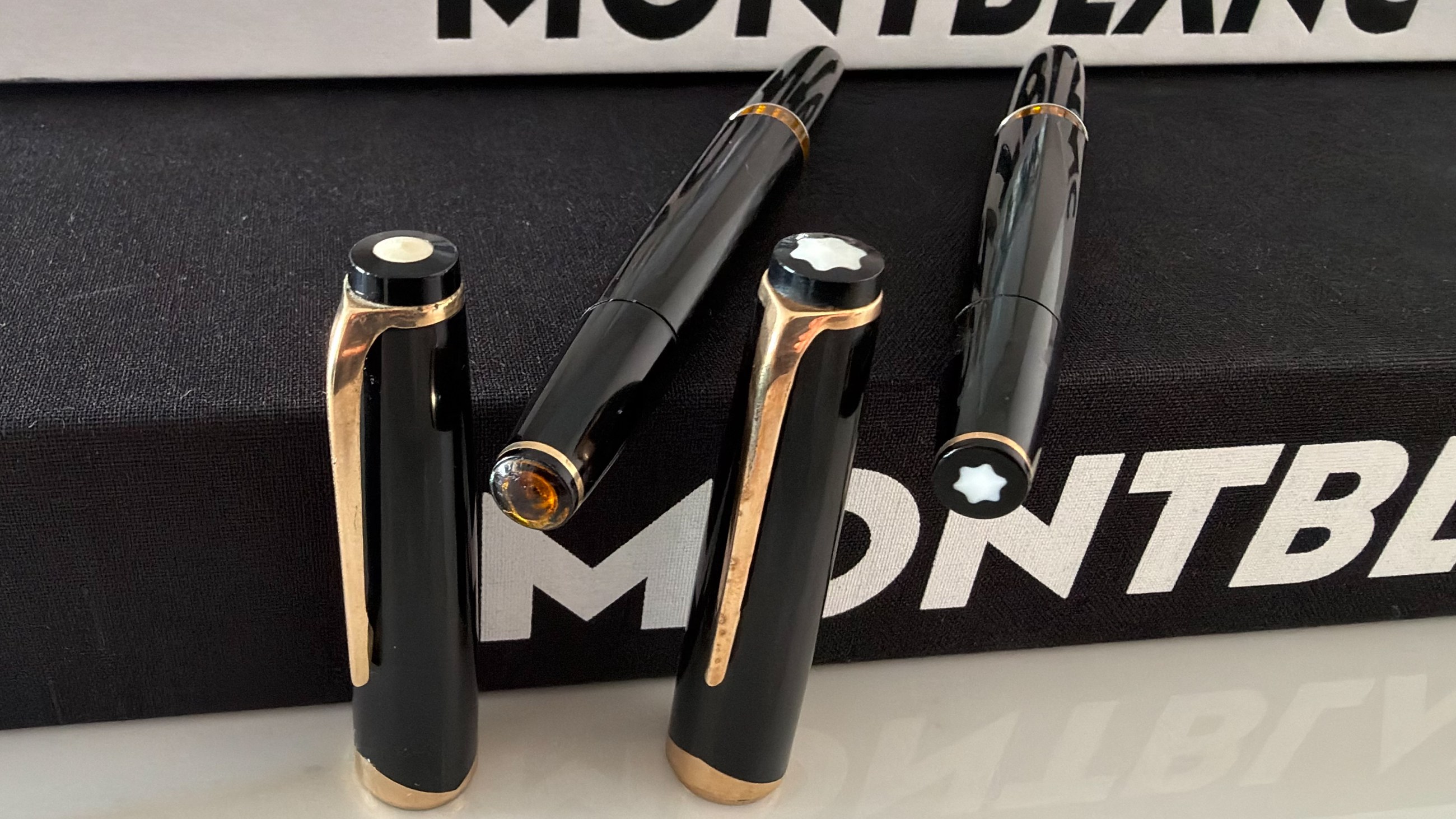
The archive calls it a white circle, collectors tend to call it the dot. The earliest example I have seen is in a photograph online of a mid-1950s Montblanc 264. In my own collection I have a 14, a 146 and a 149 with the dot, and all three seem to date from the 1960s to the early 1970s. (Decades of servicing mean parts get swapped and a pen’s components don’t always agree about its age, but these sit broadly in that era.)
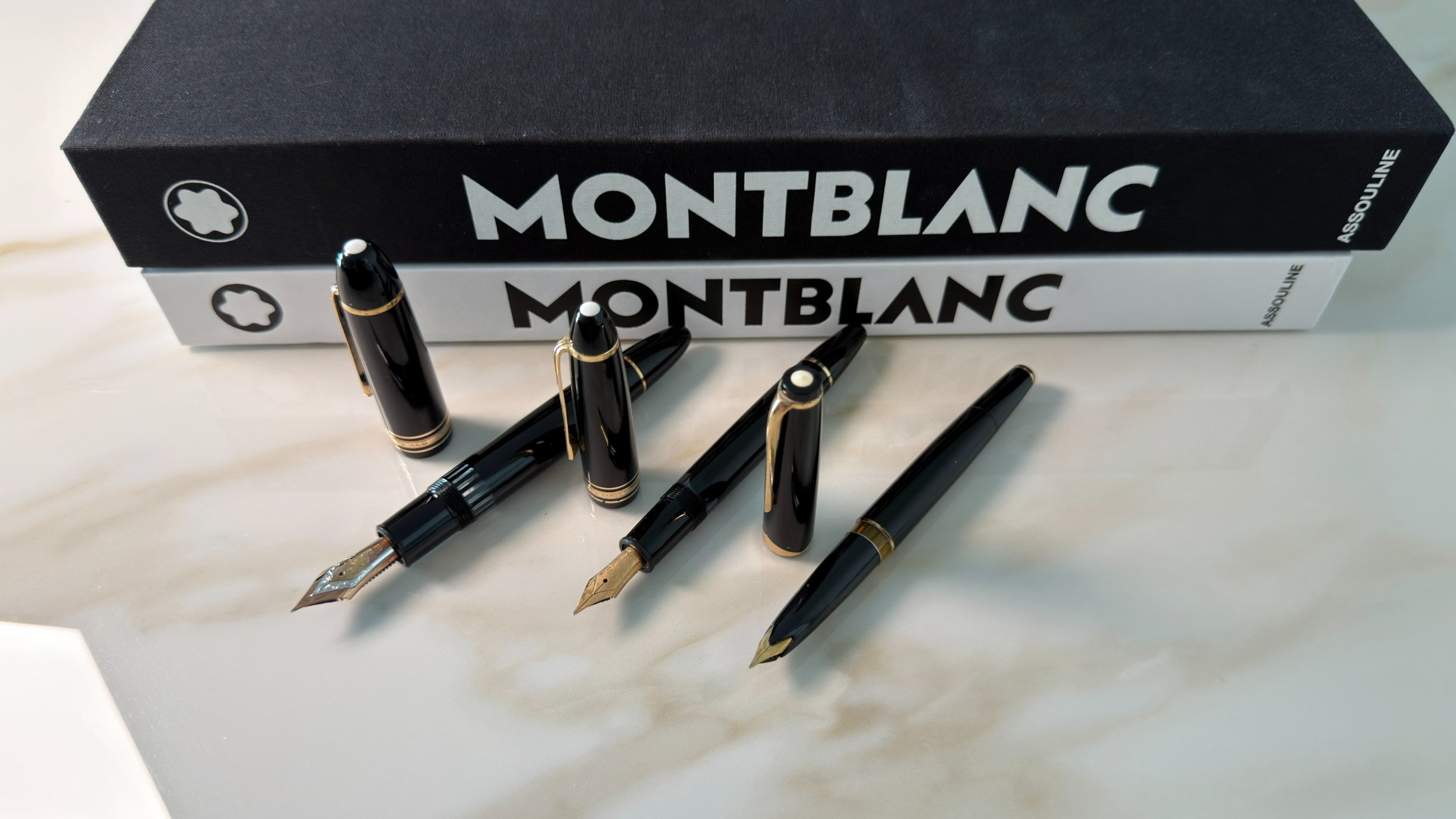
My 14 has a further quirk. The end of the turning knob on these models also carries a standard Montblanc emblem. However, for the Arab market, the model i have has had that replaced by a rather cheap-looking amber plastic ‘gem’. Whoever chose it was not having their finest hour, a simple dot to match the cap would have been preferable!
As to why the change from the dot occurred, the late Axel
Hübner once recounted in a forum post that Montblanc used the dot through the
1960s until Sheaffer objected. Sheaffer had been putting its trademarked white
dot on its own pens since the 1920s, so you can rather see their point.
Montblanc would then have needed yet another design, and this is where things
get messy.
1970’s -The triangle
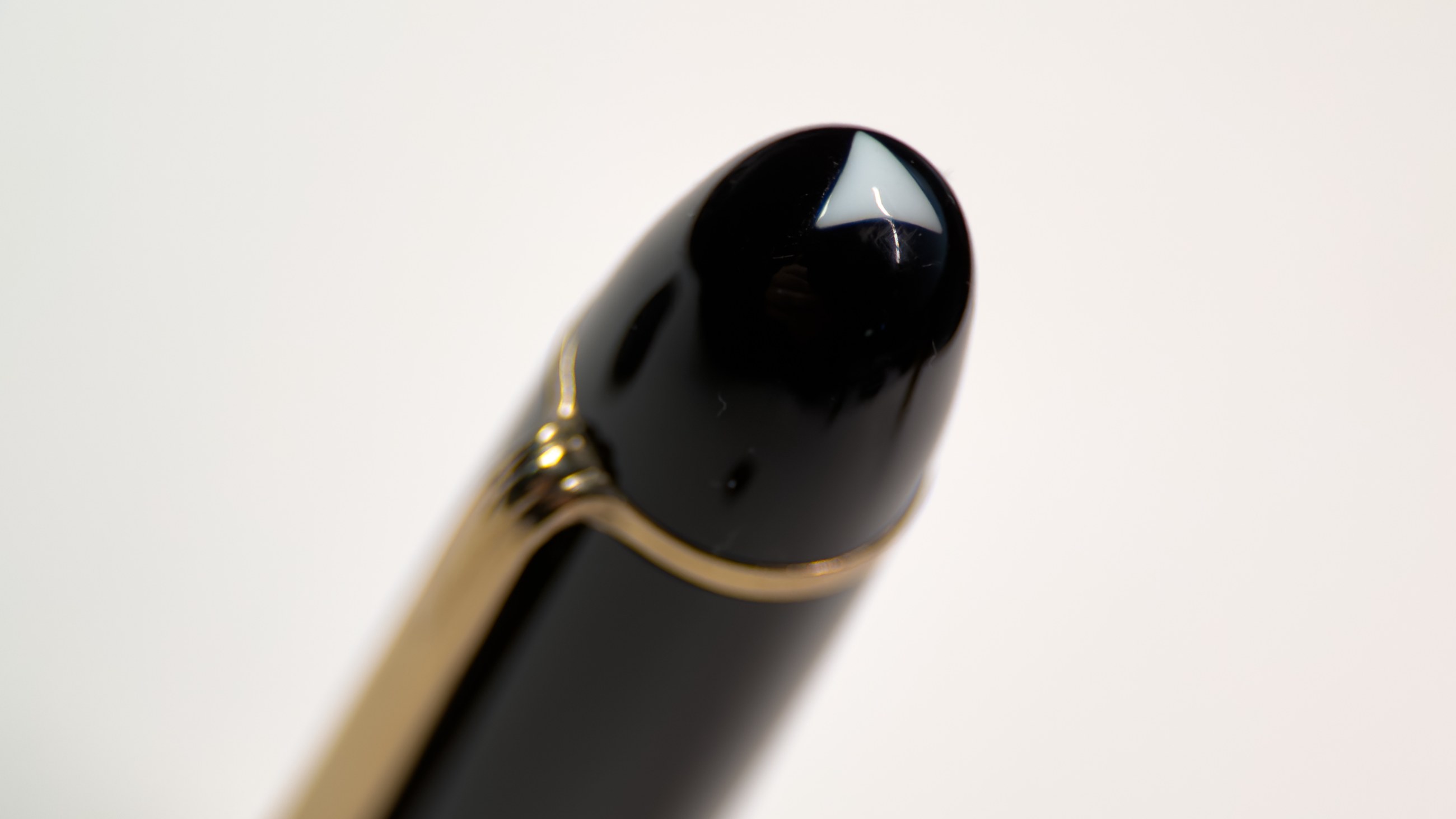
I have seen the triangle on 149s, 146, Noblesse and on a
221. Mine is a 149, and it looks to be mid-to-late 1970s going by the nib, feed
and piston. It is also the pen that got me into all this, so I have forgiven it
for what it cost. Two other 149s I have seen in photographs and at auction are all
of similar age, and the 146, the Noblesse and the 221 all date from the 1970’s
too. The 221 is the odd one out. It has the triangle on its cap and a circle on
the end of its flat turning knob, so two of the variants share a single pen.
All of which leads me to believe that the triangle succeeded the dot once
Sheaffer had made its feelings known.
1970’s - No emblem(2)
I saw my first emblemless Montblanc about a year and a half ago and was fairly sure it wasn’t genuine. Then the archive’s answer arrived with ‘no emblem’ on the list. I spent the following months pestering everyone I know and searching every corner of the internet until I tracked one down; it has been mine for a few months now.
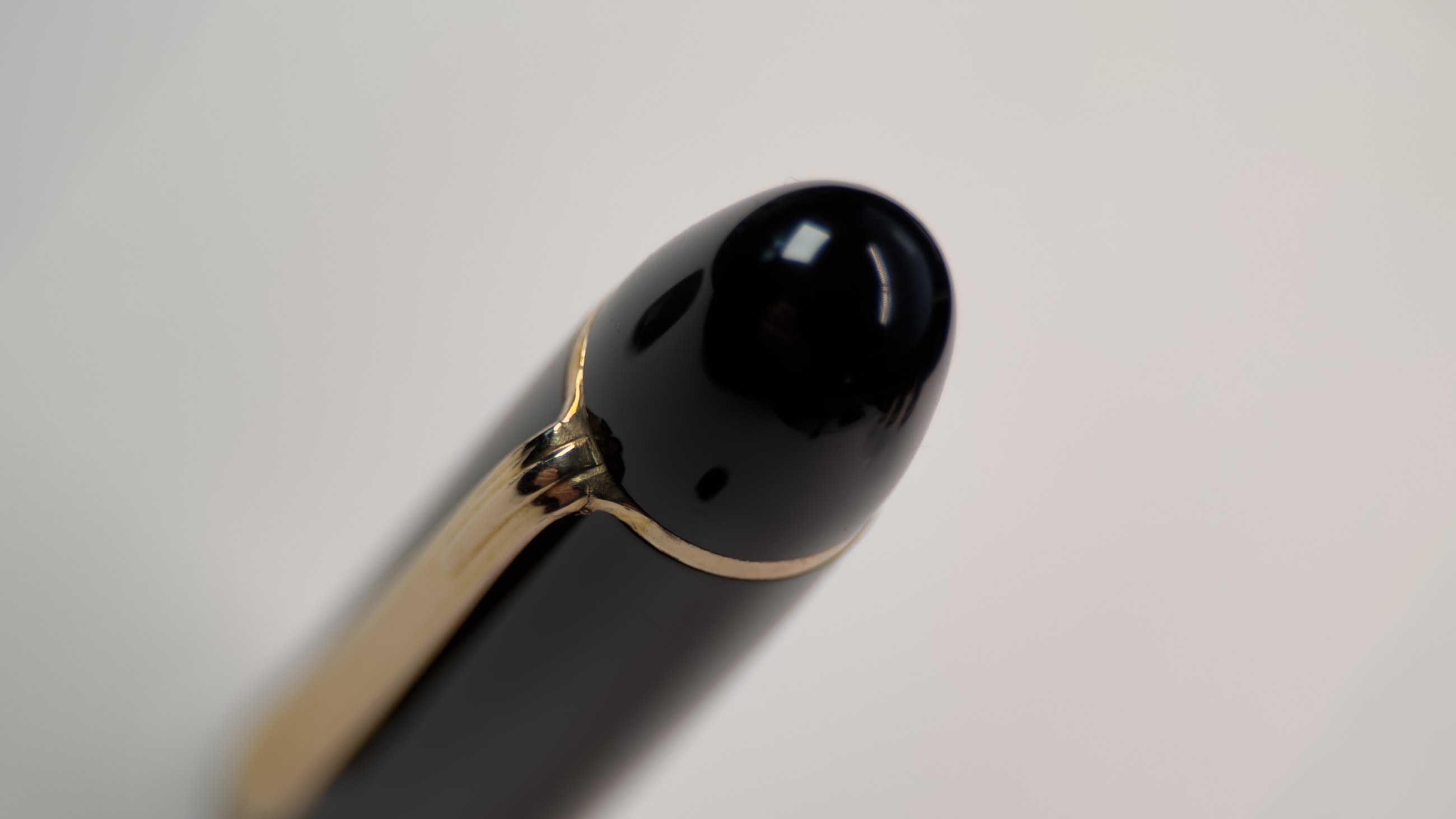
So here is my theory, and I stress that it is mine alone. Once the Sheaffer problem arose, Montblanc may have dropped the emblem altogether for a while until a replacement could be designed and put into production. Montblanc had made pens without an emblem before, so going back to a bare cap/ emblemless design as a stopgap once the dot had to go would have been a perfectly logical thing to do.
Whilst I would like think there is some circumstantial
support for this, I cannot be sure. I can't prove it so all I can report is that
there seem to be a time during the 1970’s where both no emblem and the triangle
were produced.
Late 1970’s- 1980’s- The five-pointed star
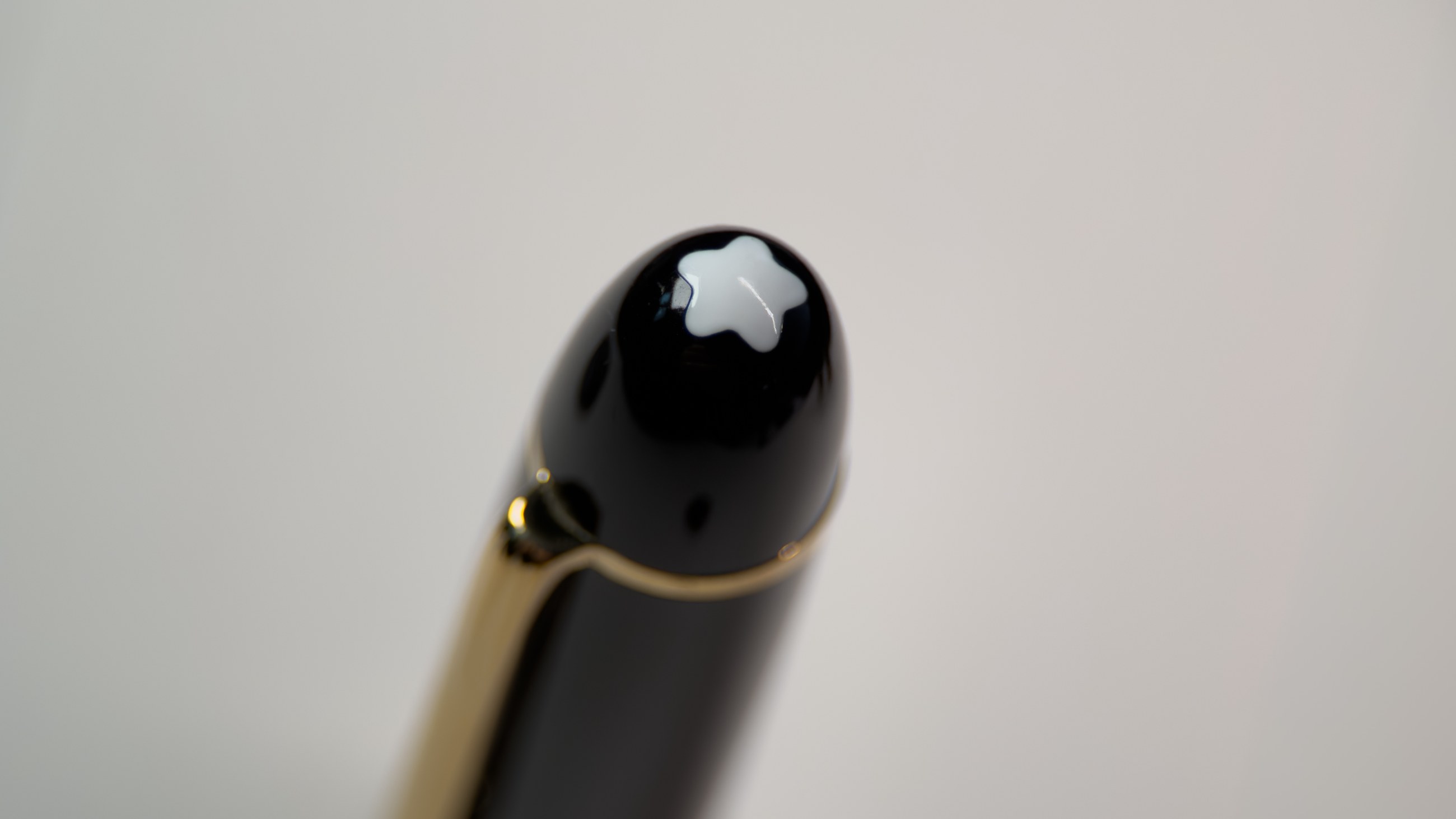
Unlike the triangle, I have only ever seen this one on 149s.
It is also the tidiest of the fixes, since it still looks, at first glance like
a regular Montblanc star. However, as it had one point fewer it could no longer
be said to resemble the Star of David.
Photographs of them float around the internet and several
have come up for sale in the last few years. Most of those I have seen date
from the late 1970s to the mid-1980s, which repairs and service parts could
explain but the fact that more than one date to the mid 1980’s cannot be
explained away by servicing (i haven’t seen any examples after the mid 1980’s).
I have therefore put them at the end of my list, among the last pens made
before Montblanc stopped altering its emblem. According to the Archive, that
happened at some point in the 1970s and so by the official timeline 1979 at the
very latest. However this doesn’t seem to add up to the collective ‘knowledge’
or evidence available (all have I seen had a 14k 2 tone nib which collectors date
to 1982 earliest).
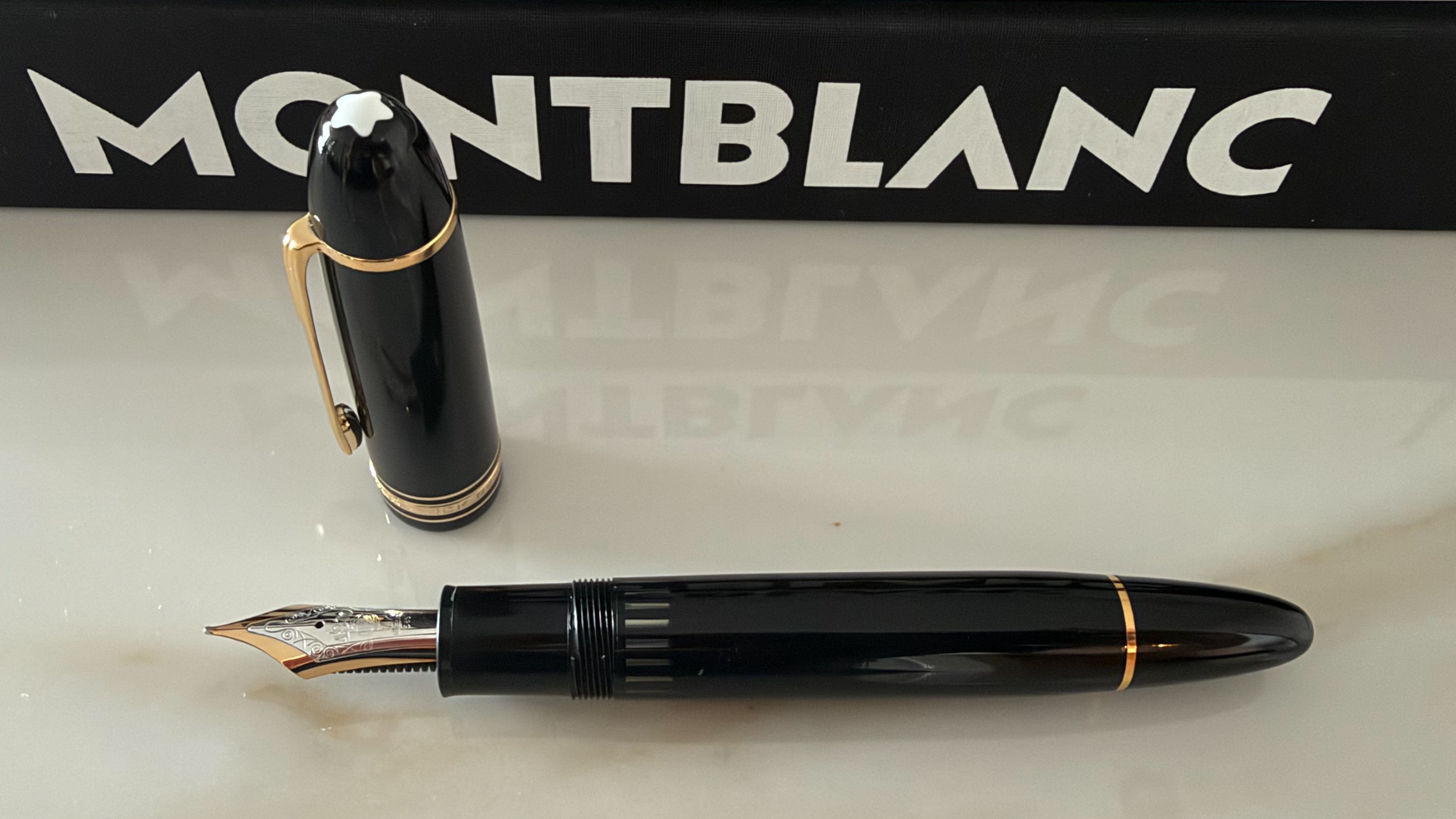
The ‘five-point star’ is where the Late Axel Hübner’s recollection
and my research deviate. In a post of FPN, Axel recalled, from memory, that the
five-pointed star was used on the 142, 144, 146 and 149 in the 1950s, which
would make it the earliest of the lot rather than one of the last. I am in no
position to doubt him, but all I can go on is what I have collected and the
photographs I have seen, and so far everything points later. The most obvious issue I have come across is that a 1950s 149 would be a ‘silver rings’ celluloid
model, so its emblem would have been made of celluloid or casein rather than modern
day ‘precious resin’/ plastic. Every five-pointed star I have seen is not made
from celluloid, which necessarily have to date them to after 1960 at the
earliest. I have never seen a photograph of a silver-rings 149 with a
five-pointed star, or even a mention of one, but I would certainly love to own
one if it exists!
What about the split emblem- 1970’s?
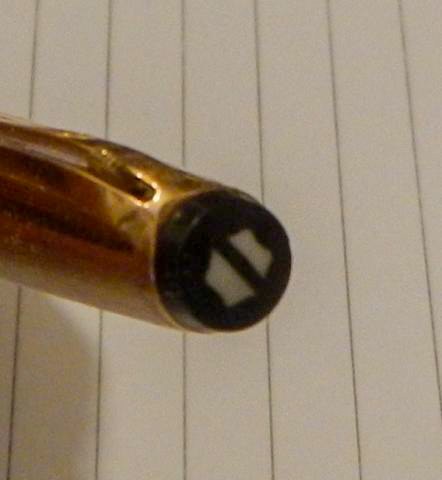
The rarest of them all, it seems. I have seen precisely one,
in a single photograph of a 1970s ballpoint. That is not much to build a
chronology on, so all I can say with any confidence is that at least one was
made in the 1970s. the information I have gathered suggested that the colour of
the line splitting the emblem could have been black or blue and this was said
to show ink colour, if this is true then that supports this emblem being used
for ballpoints rather than fountain pens I would say (given the use of refills etc).
Lend me your photos!
Which brings me to my real reason for writing. To borrow,
and mangle, a line from Shakespeare: Friends, collectors, pedants, lend me your
photos!
If you own any of these pens, or know something I don’t,
please leave a comment below or send me a message, ideally with photographs. If
you think I have got something wrong, I especially want to hear from you.
Between us we might yet fill in one of the least documented corners of
Montblanc history. This article, and all articles here on this Journal are
about sharing knowledge with the community; that is what Nibfolio was built
for.